CASH-FOR-CAR is usually provided by employers as part of a flexible benefits package.
Given the choice of a company car or a cash alternative, the cash in the bank might well prove more attractive to you as an employee, especially if your own car is in good condition and suits your lifestyle well.
Or rather than taking the stock company car from a limited selection that looks the same as everyone else’s, you could spend the allowance on a new car to lease or on a personal contract purchase that could give you the option to purchase it at the end of the day.
And you can avoid benefit-in-kind company car taxation too – although the cash-for-car element is taxable. More of which later.
Sometimes cash-for-car allowance schemes are balanced with the number of business miles expected to be covered and paid for under tax-free AMAP mileage payments – the ‘optimisation’ of a cash-for-car scheme which tax advantages both employer and employee.
A new taxation method for cash-for-car
The cash-for-car system used to be reasonably straightforward on the tax front but now it’s been complicated by new tax arrangements relating to salary sacrifice announced by Chancellor Philip Hammond in the 2016 Autumn Statement and effective on new agreements since April 2017.
The official term OpRA (Optional Remuneration Payments) covers both cash-for-car arrangements and salary sacrifice, the latter proving still attractive, particularly for cars with emissions below 75g/km CO2 which have been incentivised under the new OpRA tax arrangements.
So how do the OpRA tax changes affect cash-for-car?
We’ll try not to get technical here, but it is slightly complicated.
The tax changes to cash-for-car affect all new arrangements entered into since April 2017 for cars with CO2 emissions that exceed 75g/km.
So if you choose a cash-for-car arrangement and your choice of car is below 75g/km of CO2, then there is no change.
However, if you take a cash allowance instead of a company car and choose a car with CO2 emissions of 76g/km CO2 or more, you get caught in the cash-for-car tax trap.
And it is this.
HMRC will tax the higher benefit when comparing the car’s taxable P11D value against the cash option.
So if the employer offers cash for car but you take the company car you still get taxed on the cash option you declined rather than the lower car BIK – a penalty situation employees and management need to discuss.
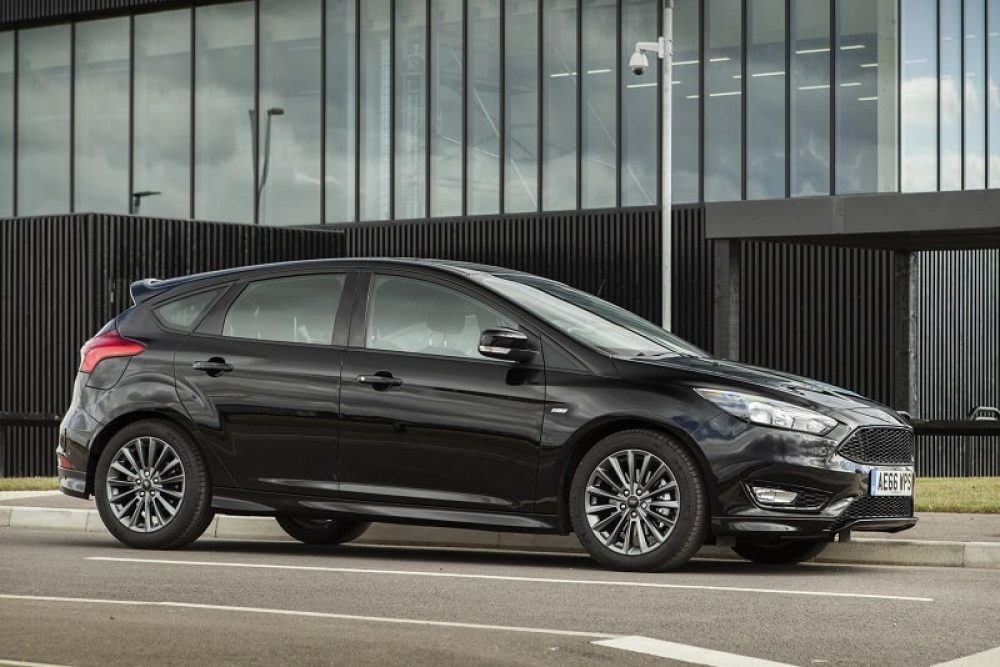
Here’s an example: a Ford Focus 5 Door 1.5 TDCi Style ECOnetic 105PS emitting 88g/km CO2.
It has a P11D value of £19,540 and 2017/18 BIK rate of £3,908. The cash option is £5,000 and the marginal rate of tax is 20%.
Because the cash amount is higher than the P11D benefit in kind, you will be taxed on the £5,000 cash allowance costing £1,000 this tax year rather than the £782 company car tax. HMRC will always tax the higher of the P11D against the cash.
So SMEs continuing to offer this benefit may need to reconsider their options if it places the employee in a financially disadvantageous position. Unless, of course, the cash-for-car option is a sub 75g/km CO2 car, such as many of the new plug-in hybrid vehicles coming on to the market.
It is probably advisable for both an SME employer and for you as an employee to discuss the options open to you either with your lease car provider or financial provider before entering into a cash-for-car agreement.
What are the advantages and drawbacks of cash-for-car?
Advantages of cash-for-car
- For the SME employer, there are NI savings and not having to worry about managing the company cars it runs – with potential savings there, too.
- For the employee, there is the chance to drive a car of your choice and take advantage of some of the great personal lease deals on offer
Drawbacks of cash-for-car
- For the SME employer there is loss of control over the car being driven by your employee – if that matters to you (but it could if they choose a cheap, unreliable heap and pocket the rest of the cash)
- It might not be ‘your’ car but you still have a duty of care responsibility, so if it’s being used on business, you need to make sure it is insured for business, you’ve checked the driver’s licence, the car is fit for purpose, and so on – it’s a potential minefield
- For the employee, if keeping your own older car for business use, you may well have to comply with company rules on the vehicle age and CO2 emissions, number of seats (for car-sharing occasions – so beware the sporty two-seater) and even fuel type of the vehicle, plus regular maintenance requirements under duty of care
- You will have to budget for your own insurance including business use – and if you have previously enjoyed using a company car you will have limited no claims discount to reduce a high personal charge – plus excesses for damage and windscreen breakage claims.
- You will have to budget for your car’s maintenance – if not included in a car lease or PCP contract – and make allowances for alternative transport during times when your car is ‘off the road’. Unlike a company car, you will be responsible for sorting alternative transport.
- You also have to pay the VED
But if you take this option, you can charge your employer a mileage fee to cover both fuel and the cost of maintenance.
The business mileage rate set by the government under Approved Mileage Allowance Payment (AMAP) is 45p per mile up to 10,000 business miles a year.