IF someone needs to drive in the course of their work, it is imperative that employers begin by checking a driving licence for the legal entitlement to drive the appropriate vehicles, and for penalty points and any disqualifications.
The basic driving licence is described as a licence to drive a car, although it also covers vans and other light commercial vehicles up to a certain size.
To check someone’s driving licence
- This can only be done with licences issued in England, Wales and Scotland. You need:
- The last 8 characters of their driving licence number
- A check code from the driver
- You must use the code within 21 days and can only use the code once – you have to get another code to do another check.
The licence classifications have changed over the years and in some circumstances an additional test has to be passed such as to drive a larger van, a minibus or for towing.
Failing to ensure that an employee is properly entitled to drive means that the employer is failing in their duty of care, and could even face prison should the employee be involved in a serious crash.
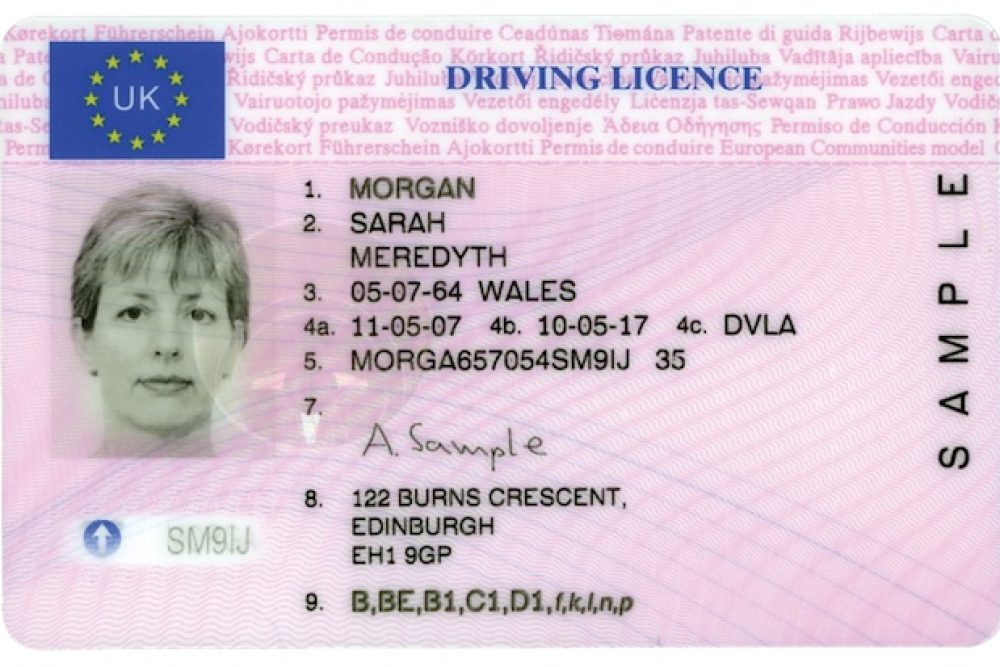
That is why the employer needs to conduct a proper check of a driver’s licence rather than a cursory glance at the plastic card which details only the classes of entitlement.
This plastic licence on its own does not provide any details of motoring offences and the paper counterpart which used to do so was abolished in June 2015, so all the more reason for a formal check. This will disclose only ‘live’ penalty points and disqualifications and not those deemed ‘spent’.
For a driver to authorise a check
- You need:
- Your driving licence number
- Your National Insurance number
- The postcode on your driving licence
One key to this is that, under data protection laws, anyone conducting such a check must have the licence-holder’s consent. To facilitate this, the licence holder can authorise a check which is valid for one check over the next 21 days.
It’s a criminal offence to obtain someone else’s personal information without their permission.
Check by phone using the premium rate number
You can make a check by phone if you don’t have a check code to use with the online service. Ask the driver you’re doing the check on to call DVLA and leave permission for the check.
For the driver to leave permission
Telephone the DVLA: 0300 790 6801
Monday to Friday, 8am to 7pm
Saturday, 8am to 2pm
Find out about call charges
You can then call DVLA to check the driver’s details after they have given their permission.
To DVLA – for the person doing the check
Telephone: 0906 139 3837 (calls cost 51p per minute)
Monday to Friday, 8am to 7pm
Saturday, 8am to 2pm
By post
You and the driver need to complete form D888/1 to do the check.
Send the form with a cheque or postal order for £5 to DVLA, Swansea to:
Driver Licence Validation service, DVRE 5, DVLA, Swansea, SA99 1AJ
By fax
You can use this service if you’re an organisation that provides vehicle finance. Contact DVLA to register to use this service.
Some organisations offer a licence checking service
If you need to make frequent licence checks in the course of your business, there are commercial organisations that offer licence checking services.
One of these is Fraikin, which offers a licence check within the hour.
Another is Licence Bureau, launching a licence checking portal at the 2016 Commercial Vehicle Show, which also offers ongoing monitoring of licence status.