Skip to content
ADVERTISEMENT

Comfort and cost: Citroën MD on the Better Roads manifesto

Greg Taylor discusses Citroën's campaign to improve Britain's roads.

Comfort and cost: Citroën MD on the Better Roads manifesto
ADVERTISEMENT

In August 2026, Citroën launched its Better Roads manifesto, setting out key recommendations for improving Britain’s roads and addressing the pothole problem. It includes AI-enabled reporting, and keeping a tighter leash on utility companies.

Citroën believes the fixes could unlock savings of £5.5bn by reducing accidents and improving efficiency.

What made Citroën decide to write its Better Roads manifesto?

Everyone’s got a story where they are going to go to the shops, they are dropping kids off at school and have had to duck and dive to avoid the potholes. So, we looked at that and thought, something really needs to be done.

This is not to say that Citroën is going to take over and be responsible for repairing Britain’s roads.

ADVERTISEMENT

The cost of living has been at the tip of everybody’s tongue for the past two or three years, and Citroën believes that fixing Britain’s roads could unlock savings of at least £5.5bn by reducing accidents and improving efficiency.

While we have cars that are perhaps more comfortable when you are driving across Britain’s potholed road network, they could be even more comfortable if the roads were smooth.

We’ve been involved in the space for two or three years, drawing attention to the problems and the inefficiencies that exist in repairing potholes.

ADVERTISEMENT

We instigated a Freedom of Information (FOI) request, which told us how few Local Housing Authorities (LHA) use geolocation for current potholes. We investigated how many people would be willing to potentially pay even more Council Tax if they knew that it was specifically going towards fixing the road.

Rather than just alerting people to a problem they know exists, we wanted to also speak about what we can do to solve it.

ADVERTISEMENT

What stands out to you most about the manifesto?

One of the biggest items is the call for local highway agencies to make use of AI to more efficiently record where potholes are, and categorise potholes in a more uniform way across the country and between different LHAs.

ADVERTISEMENT

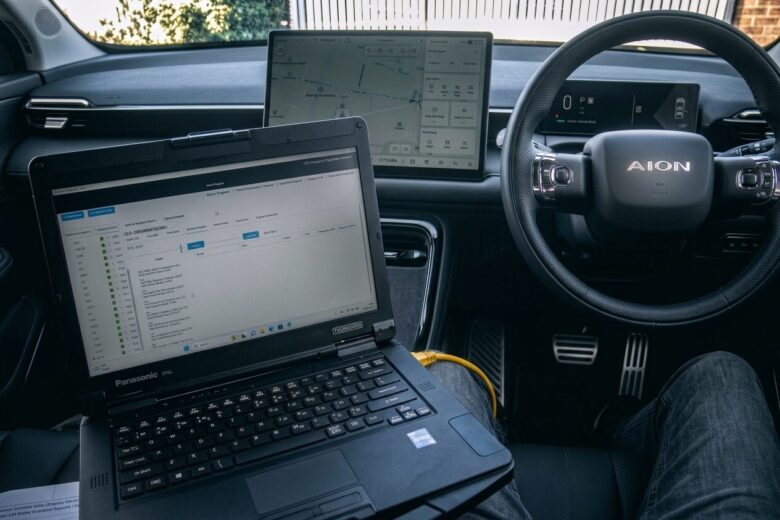
There is a tool called STAN that is available to record potholes. It loads it up to a central database, and then AI will categorise it, classify it in terms of the state of repair the road is in, and enable NHAs [JB1] to then prioritise the fix and repair.

The general public can get behind that as well. When Citroën was researching it, we found that people would be willing to use this technology to support road repairs.

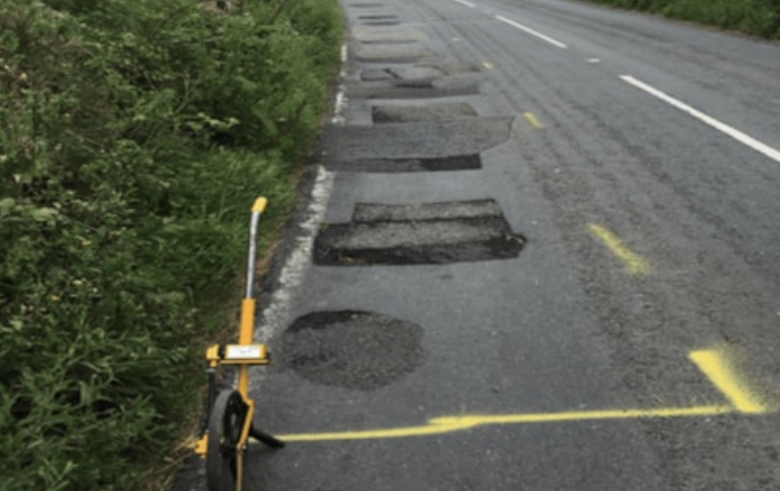
Another key area for me was the preventative measures we laid out. Utilities companies, for example, do not have to follow a uniform process in terms of the level of repair required.

Of course, we all need utilities, so we’re not saying that they cannot pick up the road – everyone wants faster internet and water pipes that don’t leak. But it’s more about when the repairs are done, what quality they are done to, and whether that’s uniform across the country.  

ADVERTISEMENT

Dave Gaster, a qualified highways engineer, supported the manifesto. He said that in some cases, the repairs can start degrading within months of the utility companies filling the holes.

It’s important from a road safety perspective as well because the volume of incidents that occur each year causes high costs, both emotionally, humanly, and financially, to the British public.

What can fleet managers do to support this?

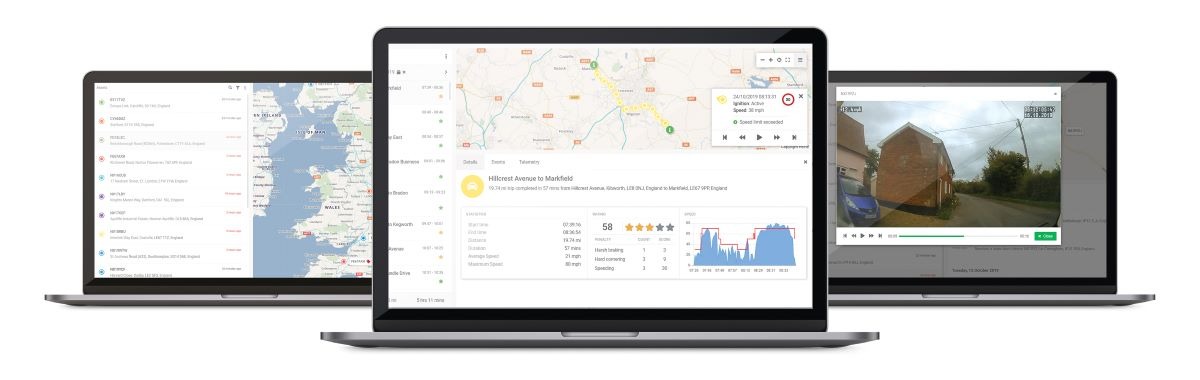
Using the STAN app to report potholes on the roads would be a good start. If the company has cameras in the car, or the phones are set up so that they can scan the roads that they are driving on, it will automatically feed it through to the database.

So, it is about making sure fleet companies are aware that this technology exists.

We are currently making them aware through a campaign with the STAN app, and through our fleet division.

ADVERTISEMENT

We want people to become responsible and accountable, because from their perspective, not only is it costing them money with tyre blowouts, but from a health and safety due diligence perspective, it is important that they get involved.

We want them to support this, and we believe what that one of the ways is that we can all be involved. We can work with our fleet team and fleet managers to support the movement towards better roads.

Is there a concern that new brands with vehicles that lessen the impact of potholes will overshadow Citroen’s ‘comfort USP’?

That is not a concern for us. Comfort was already part of our philosophy since the inception of the brand, and we have been through various iterations of what that looks like.

This is a very specific use case for the UK, and it is not as necessary for the vehicles to be engineered that way in other countries due to the state of the roads being better.

What is your definition of a pothole?

Our role is not to define it, but it is to draw attention to the benefits of having a universal definition.

In the manifesto, we called for a comprehensive and universal definition of what a pothole is, because currently, LHAs have differing classifications.

If we start to look at national funding based on maintaining the roads without uniformity, you would not be able to, because how would you be able to distribute funds fairly?

This is not a witch hunt, and we are not saying that mistakes cannot be made. But there are some LHAs that perform very well and have a really good programme, so there should be a focus on setting them up with the same brief, and allowing other LHAs to follow in their footsteps.

Ultimately, making these things uniform will support people taking accountability.