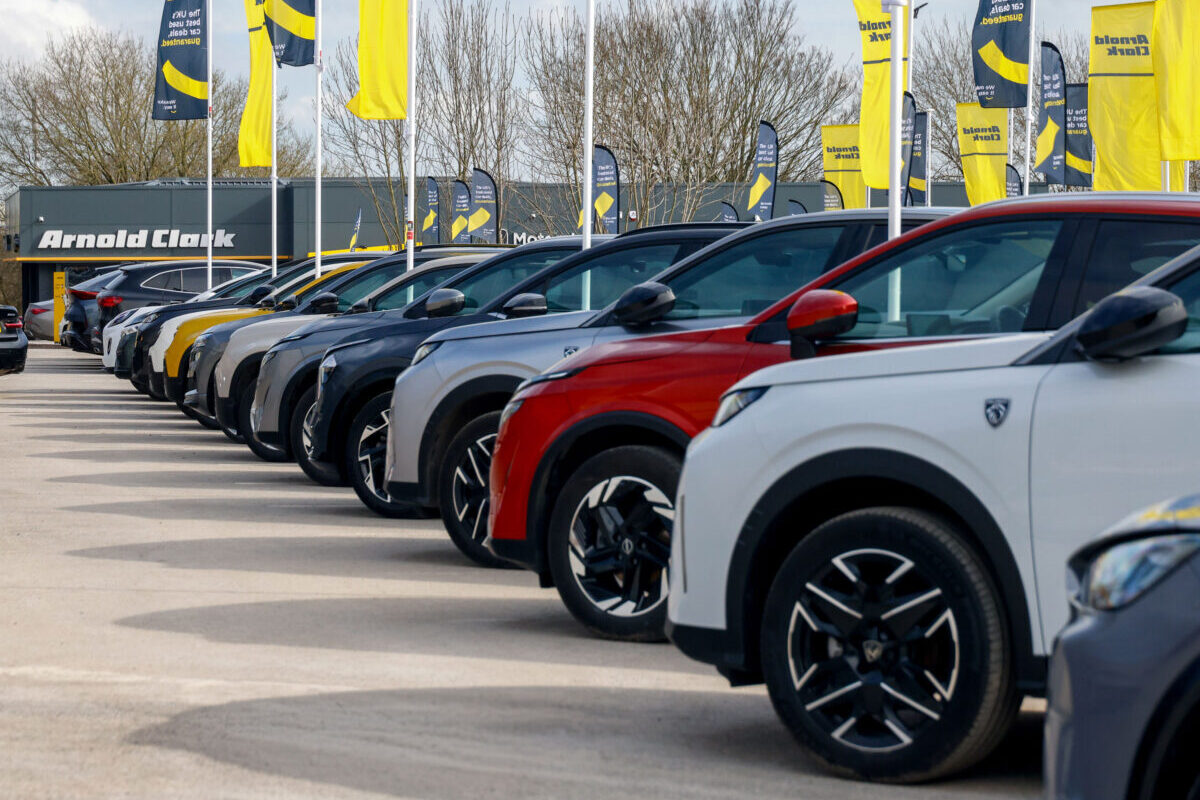
John Smyth, director at Swansway Motor Group, says: “There’s strong demand for used cars, but customers are still looking for vehicles that meet their individual criteria. It isn’t simply a case of customers moving towards older vehicles, it’s about finding the right combination of age, mileage, condition, specification and price for their budget.
“We’re seeing customers become increasingly conscious of value, particularly with the cost of living and the price of new vehicles. That means there’s a strong opportunity in the used market, but dealers need to make sure they’ve got the right stock available to meet a wide range of customer requirements.”
Businesses are not immune to the economic pressures. Budgets are pinched, new vehicle prices are rising, and something has got to give.
Tom Mansbridge, senior technical consultant at Jaama, says: “The financial case for used vehicles is strong, with lower acquisition costs and reduced depreciation exposure freeing up budget elsewhere. Used EVs can strengthen that case further, provided buyers are confident about battery health and protected against major replacement costs through suitable warranty cover.
“But those benefits only hold up if the vehicle is properly vetted at purchase and then actively managed on fleet. A used vehicle bought on the back of good data, supported by clear warranty coverage and maintained proactively can deliver excellent value across its remaining lifecycle.”
The affordability picture is much more stark for the private buyer, and therefore the selling dealer, Palmer says: “Salaries and the price of cars have increased broadly in line. But while salaries have gone up, food, energy, rent and mortgages have all gone up much more. The amount of money people have to spend on a car feels about the same, but everything else has gone up.”
A study conducted by Startline Motor Finance in July found that 73% of motorists’ finances had been stretched by the war in Iran. This went beyond pressure at the pump, with 36% less likely to replace their current car, and 19% spending less on servicing.
Rupert Pontin, head of insight and communications at Brego, agrees that consumers are increasingly driven by cost, but are not necessarily deferring purchases. He says: “Over the past three or four months, we’ve seen an increase in demand at that older end of the market. That’s driven by families being cost conscious.”
Good as new?
While drivers are looking for older vehicles, they are unwilling to compromise on condition, history and mileage. This makes stock sourcing more complex than looking at age and price, Pontin says: “When they walk onto a forecourt, whatever age that vehicle is, they expect it to be almost like a new car. That makes life more difficult.
“The dealers, as a result of that, when they’re buying from the wholesale platforms, consistently look for cars that are in really good condition. They can get it on sale quicker, and spend less money on preparation.
“Auction companies are seeing an increase in the number of vendors that want to do SMART prep work on the vehicle before they offer it for sale, which makes sure they’re getting the best price they can for the car, but also that they’re turning it quickly.
“As a result, some of the wholesale prices over the last nine months have started to increase on some vehicles.”
The risk of poorly selected older stock is not just that it becomes glued to the showroom floor. Buyer protections, such as the Consumer Rights Act of 2015, mean that older cars can become more trouble than they are worth.
Smyth says: “There can be greater risks around condition and potential faults, and consumer rights mean dealers have to be particularly careful. It’s important that the vehicle is properly assessed and prepared.”
Swansway has placed particular emphasis on stock turn in recent years, aiming to increase the efficiency of its whole used car operation. Smyth says: “We use a range of trusted sources, including auctions and online platforms such as Carwow and Motorways, and we’re always open to exploring new avenues as the market changes.
“Stock turn is critical in the used car market. The longer a vehicle sits on our forecourt, the more money it’s costing Swansway, so we’re continually looking at how we can source, prepare and retail vehicles as efficiently as possible.
“We need to make sure vehicles are presented to the right standard for customers, while balancing the cost of preparation against the age, value and likely retail price of the vehicle.”
Keeping a brand-new car or van in tip-top shape on a three-year maintained lease is painless – something that cannot be said about taking a five-year-old car beyond its manufacturer warranty. Vehicles are far more reliable than they were 30 years ago, but oil still needs changing, rubber still perishes and tyres still wear out. To ensure vehicle uptime does not take a nosedive, maintenance needs careful attention.
Mansbridge says: “Reliability is still a factor, but it’s become more nuanced. The real risk with older vehicles is upkeep, as parts availability becomes a bigger factor, while for EVs the perceived risk is often centred on battery degradation and replacement cost.
“Downtime is a direct cost, whether through cost of repair, delayed jobs, or lost revenue, all of which erode any saving made on the initial purchase. The way to mitigate this is through proactive maintenance planning built on centralised data, scheduling servicing around a vehicle’s actual condition and usage rather than a generic timetable, and flagging vehicles approaching key risk thresholds before a fault takes them off the road.”
A competitive edge
Careful planning is key to making used car sales a worthwhile operation, not a rusty headache. This is complex, with a hot-and-cold market influenced by more nuance than a move away from diesel or preference for a certain mileage range.
Pontin explains: “The key mileage band at the moment is 30,000 miles to 60,000 miles. That’s where we see the biggest volume of sold vehicles, and we see the least days to sell. As the vehicle gets older, it takes longer.”
A key way of keeping up with the market is using data, not only to source the right vehicle, but to control costs and maximise margins, Palmer explains: “Get control of the cost base: salaries, policy changes, energy, rates, and stocking loan rates. A way around that is to maximise the margin of the stock that you do bring in, that you do turn. That definitely has to be about being really forensic and using the data available to you to source vehicles in a really smart way. [Find] what’s going to sell in your local market for the right money. You don’t need to take chances on that sort of stuff anymore. That will be a way to mitigate the cost increases that we see. Harness the power of technology rather than add it as a cost and a bit of confusion.”
Technology has also become deeply ingrained in the sourcing process. In the summer, Carwow ran an automatic number plate recognition (ANPR) campaign called ‘The Fling’, which targeted drivers of in-demand used cars, aiming to get them to ‘break up’ with their car. Platforms such as Carwow and Motorway have provided new opportunities for dealers, giving them access to private seller vehicles they would not ordinarily be offered.
Some dealers have taken this further, opting to buy directly from owners. This is more time consuming than slapping a few bids on an online auction, but arguably offers greater profit potential, Pontin explains: “Generally speaking, they will find that a private vendor will sell a car cheaper direct to them than they would if they were getting it through Motorway or through an auction, because it’s making life easier for you as a vendor.”
A move towards older cars can provide additional profit opportunities. Customers may be looking for additional reassurance, through an extended warranty or a service plan, while spend in the aftersales department often goes further than just routine servicing.
Smyth says: “At Swansway, we look at used cars much more broadly than simply the margin on the vehicle itself […] including finance, insurance, aftersales, servicing and other additional products and services. These all contribute to the overall profitability of the customer relationship. The key is understanding the whole picture rather than focusing solely on the profit made from the vehicle. A used car can create a relationship that continues well beyond the initial sale.”
A confidence boost
The transition to EVs has been anything but smooth for the used market. Fears around battery longevity, price volatility, and the fast pace of vehicle development have all contributed to weak confidence.
There are signs this is beginning to change, though. Dealer confidence is growing, with a third of independents that stock vehicles under five years old now having sold EVs.
There are still challenges, though. Pontin says: “When it comes to an EV or a hybrid, they don’t know whether they’re going to be wearing wellington boots or gloves, and what happens if it catches fire. They don’t want that hassle. They don’t understand it, so they don’t want it.
“The biggest problem is around being able to prep that car, having technicians that have got experience to work on it, so that they can get it properly ready for sale. It puts a whole different dimension on the dealership, because […] you’ve lost all that profit that comes with aftersales. An EV does not need the same level of care and maintenance that a fossil fuel car does.”
Price instability, while traditionally viewed as a weakness, has arguably helped the EV transition at the older end of the market. While new car buyers have been turned away from EVs due to often higher list prices and more expensive leases, some used car buyers have electrified purely based on the value proposition. The same is true for fleets, especially those buying outright. A fleet leasing a new EV must take the depreciation hit, but buying that same car at three years old is often a bargain.
Smyth says: “Lower residual values can be positive […] because they can make EVs more accessible to a wider range of buyers. As the used EV market continues to develop, there’s a real opportunity to bring EVs within reach of customers who may not have considered them when buying new.”
There is evidence, however, that change is on the horizon. In July, Autotrader found that retail prices for three- to five-year-old EVs were up 10.2% year-on-year, driven by strong consumer demand.
Pontin is positive about long-term prospects, saying: “We see the price of EVs as a whole increasing over the next three years. We had that big drop off in pricing, and it will start to come up as more people adopt used EVs. It will give consumers a bit more stability.”
He adds: “We’re driving people out of fossil fuel cars with heavier taxation and higher fuel costs.”
It is important, however, not to mistake signs of progress for a fully resolved market. As ever, challenges remain, highlighted by the fact that the Government is now reviewing the ZEV Mandate. Pontin believes that, at least as far as the used market is concerned, this could be damaging in itself, saying: “We’ve already pushed the legacy manufacturers into a corner and made them make significant investment and production changes to try and meet these targets. To suddenly say to them ‘OK, you’ve got another five years’, what kind of messaging is that giving? We need to stick to it. If you talk to the big dealer groups and manufacturers, they’re angry that they were put in that position to start with, but they’ve got on with it. It’s just very difficult and confusing for business.”
Continuity
Five years ago, it seemed the dealership experience itself was under threat. Much of the car buying process had been forced online, and dealers worried that consumers would be unwilling to go back to the comparatively old-fashioned way of doing things, coupled with a move to the agency model by some OEMs.
The death of the dealership did not materialise, though. Customers returned after restrictions eased, and surveys suggest a general preference for the experience itself. In August 2025, AutoTalker found that 72% of buyers prefer to purchase at a dealership.
Palmer thinks the status quo will remain for the foreseeable future: “People seem to have gone back to buying quite locally. We saw the distance travelled to buy extend in the Covid and post-Covid period, just because there was less immediate supply to buy. Now there’s plentiful supply in the market.
“Online buying has not really sustained itself, as we thought it might have done in 2021 and 2022. The consumer is saying ‘I trust the dealer down the road, and I can get it serviced down the road’.”
At the same time, dealers have made improvements to the customer experience, Pontin adds: “If the industry had done it properly in 2021, 2022, 2023, we could have been looking at a completely different shape of market. It can be quite nice to go along, touch and feel, and chat to the sales team. The way in which dealers have structured their sales environment has changed hugely in the past few years.
“Gone are the sharp sales practices, the tactics to make you buy the car right now. They’ve rightly acknowledged that today’s consumer is doing a lot of research online.”
New faces, familiar challenges
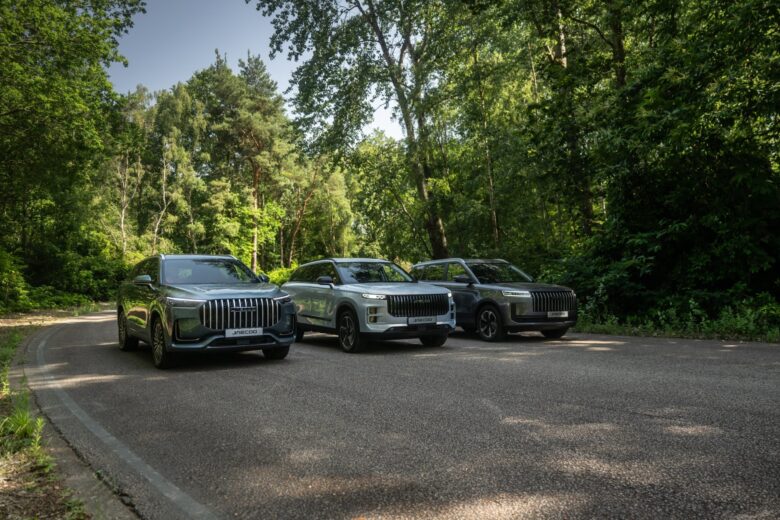
As the market progresses, one of the primary questions is this: how will the used market respond to new Chinese cars as they age? Early signs have been positive, with respectable value retention and fast sales, but volumes have been small so far.
BYD and OMODA&JAECOO have already set up approved used operations, but it is not yet clear if efforts will be made by all Chinese OEMS to support these cars in the longer-term. Fleets would welcome efforts to protect long-term residuals by keeping as many used cars in the franchise network as possible, but the manufacturers may instead focus on new car sales. Making well-informed stocking decisions will be crucial to take full advantage of the Chinese opportunity.
This is arguably truer for EVs, with performance varying widely by model, and the cars themselves being markedly different from ICE cars.
Smyth sees opportunity here, with the dealer taking on an important role: “It requires an open mind and a willingness to embrace change. The used EV market is still developing, so dealers need to understand the differences and be prepared to adapt their approach.”
Supply shortages caused during Covid-19 are now making their way well beyond the franchise network. So far, dealers and fleets that sell or operate vehicles over five years old have been insulated, but this will begin to change. At the same time, those in the younger end of the market will enjoy some relief.
But, as Palmer concludes, there is reason to be somewhat optimistic: “I don’t see the demand picture changing. Consumer confidence is pretty stable. The used market is always really well insulated anyway, even through financial crises. I think the market will remain on a really stable footing.”