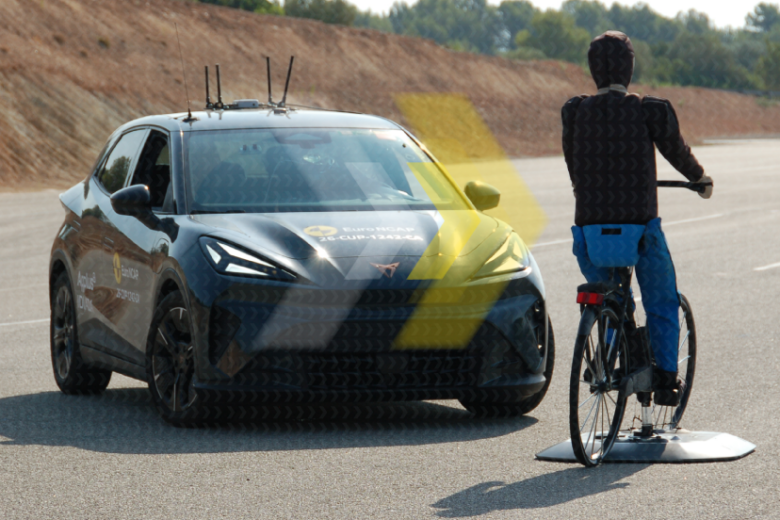
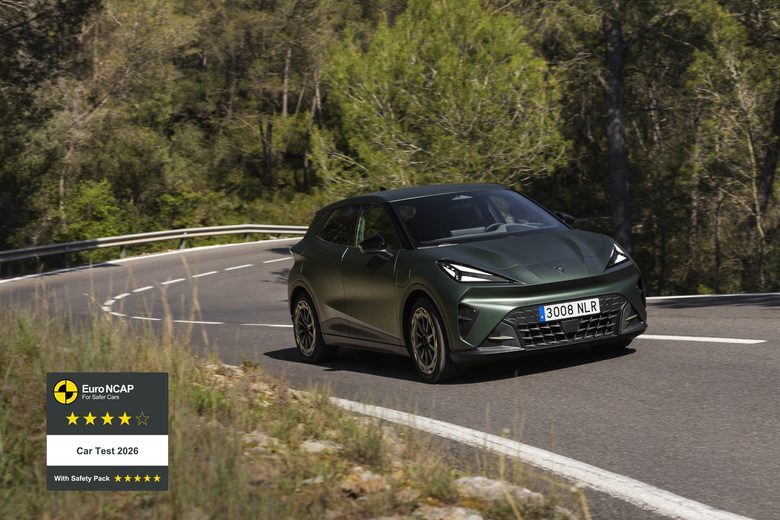
There is still some way to go in representing women and diverse bodies in official testing, but this does at least mark an improvement. In the 1990s, for example, the only crash tests required in the UK were 30mph frontal crash tests, where there was no dummy and the pass mark was determined on how much the wheel had moved.
Edmund King, president at the AA recalls: “These tests were dramatic. The Rover 100 was described as having ‘improved safety features’ – it had side impact bars and an optional driver airbag – but my first sight of the car after the frontal crash test made me shake and feel sick. Even today, looking at the pictures of the half-squashed Rover makes me feel uneasy.”
Jon Wakefield, managing director at AION, explains that safety in vehicles has changed tremendously over the years, affecting the way that vehicles are built.
In its current iteration, manufacturers are much more focused on proactive safety in vehicles, which he describes as a drive to “prevent accidents, prevent harm to people outside the car and harm to people inside the car.”
During its evolution, Euro NCAP has introduced four pillars: Safe Driving, Crash Avoidance, Post Crash, and Crash Protection. These aim to enhance safety testing to ensure the driver is safe from the point of entering their vehicle. These days, manufacturers are creating cars that are proactive and high-tech when it comes to detecting road hazards and alerting the driver to potential dangers. Advanced Driver Assistance Systems (ADAS), for example, provide finely tuned safety features.
Nevertheless, the – in some cases quite literal – bells and whistles, come with their own safety concerns, such as that the myriad alerts might be distracting for all but the most focus-minded drivers.
Wakefield also points to the example of the steering wheel recalibrating if the car detects that the driver is lane swerving. This can have the opposite effect if the car over-calibrates, to the point where it can cause more harm than it is preventing.
EV accessibility
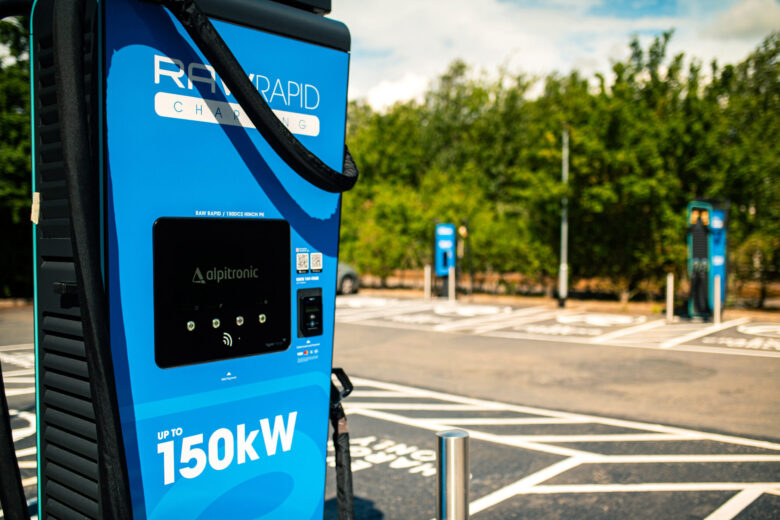
Across the automotive industry, every conversation – from design to driveability – is increasingly centred around electric vehicles. Beyond range and battery health, a lesser-discussed topic accessible infrastructure for EV owners.
Vicky Edmonds, CEO at EVA England, warns that “only around 2% of public charge-points are considered fully accessible, while [our] research found that 47% of EV drivers have experienced some form of accessibility issue.”
Edmonds has been advocating for this conversation to be more widespread, and for public EV charger accessibility to be improved.
She says: “Accessibility also exposes a wider accountability problem. Drivers still lack a clear, independent route for complaints and resolution when public charging does not meet expected standards.”
Edmonds adds: “Accessibility is about the whole charging experience: whether a driver can park appropriately, move safely around the vehicle, reach the charging port, use the charger and payment terminal, and complete a charge independently.
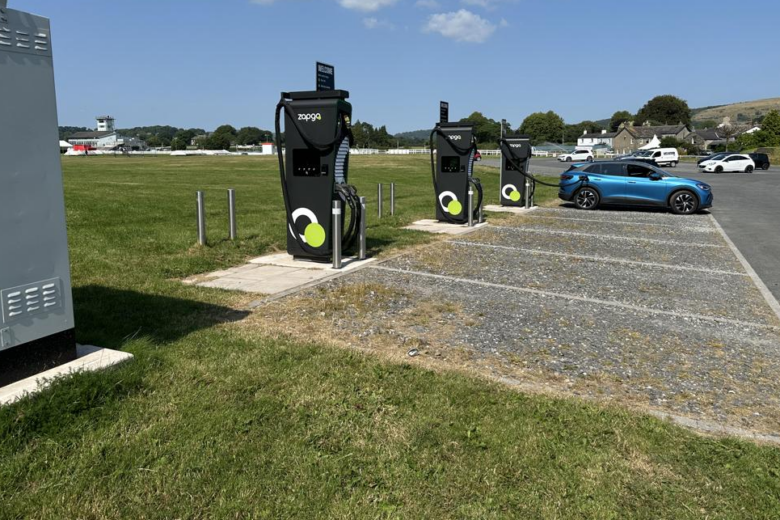
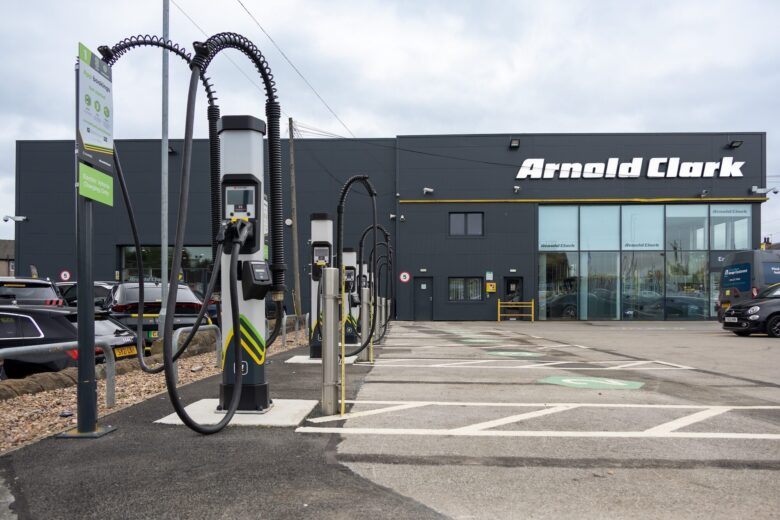
“Problems reported by drivers include charger positioning, bollards and narrow footpaths, cable handling, screen height and kerbs. This really matters – it can make the difference between someone feeling confident enough to buy and use an EV or not.”
Sean Incantalupo, transport solutions manager at the Motability Foundation, says: “Our research shows that accessibility is about the whole charging experience – from parking and accessing the charge-point, to handling cables and connectors, reaching screens and controls, and making payments independently.”
On a recent episode of the Automotive Business Podcast, Graham O’Reilly, co-founder of EV Cables, shared that the traditional charging cable is extremely heavy, using the example of his mother being unable to pick it up.
Whether due to age, injury or disability, this can affect the ease of EV ownership, adding yet more barriers to the UK’s push towards electrification. These might seem like peripheral matters, but should arguably be tested alongside in-vehicle technology to ensure safety and accessibility for all drivers, not just those that fit a certain mould.
Incantalupo adds: “With the sale of new petrol and diesel cars in the UK due to end in 2030, it’s more important than ever to ensure that disabled people are not left behind in this transition to EVs.”
PAS 1899:2022, the UK’s specification for building an inclusive and accessible public charging infrastructure, is a step in the right direction, according to Edmonds, providing “the main accessibility standard for public charge-points, covering areas including bay size, charger positioning, displays and cables.”
However, it remains voluntary.
Edmonds says: “That is why EVA England campaigned through the Planning and Infrastructure Bill for Government to have powers to intervene if voluntary progress fails.
“The resulting legislation now gives Government powers to mandate accessibility requirements where necessary. But it has been almost a year since the passing of that legislation and we are still waiting for an update standard that industry can comply with to be published.
“With more and more charge-points going in the ground every day, we cannot afford these ongoing delays.”
Next steps
What the future holds for diversity in vehicle safety testing and development cannot fully be known. Ideally, with 48.1% of UK driving license holders being women, as of DfT data in 2022, the future should at the very least include a few more female crash test dummies.
The truth is, of course, that no safety test, or infrastructure development, will ever be perfect. There will always be those whose bodies or needs fall outside the realistic range, and there is only so granular one can get before stalling production entirely.
What is known, however, is where the Government could step in to support the infrastructure needed to make EV charging accessible to all. This would be a good place to start, particularly in the push towards net zero.
Edmonds says: “Government should set a clear timetable for publication of the revised PAS 1899 standard, establish robust and independent monitoring of industry progress, and be transparent about when it will use its powers if voluntary adoption does not deliver accessible infrastructure at scale.
“Charge-points being installed now could remain in use for many years, and retrofitting accessibility later can be considerably more expensive than getting the design right from the outset.”
Incantalupo adds: “We developed PAS 1899 with the UK Government and BSI to provide a benchmark for accessible public charging, informed by disabled people’s own experiences. We are now working with OZEV, UK Government, industry and partners to implement the standard and contribute to the development of a European standard.”
There are clear next steps for the Government to offer support to disabled drivers contending with EV charging. Beyond that, though, the automotive world is changing, faster now than ever. From daily news of EV innovation, all the way through to the impending advent of autonomous cars, which might change our relationship with the road entirely.
Through all of this, one thing remains true: passengers should not step foot in a car unsure whether they are going to be safe based on characteristics like gender and disability.