Ford and WWU partner to reduce carbon emissions
WWU is running the 12-week vehicle trial of a prototype Ford Transit light commercial vehicle.

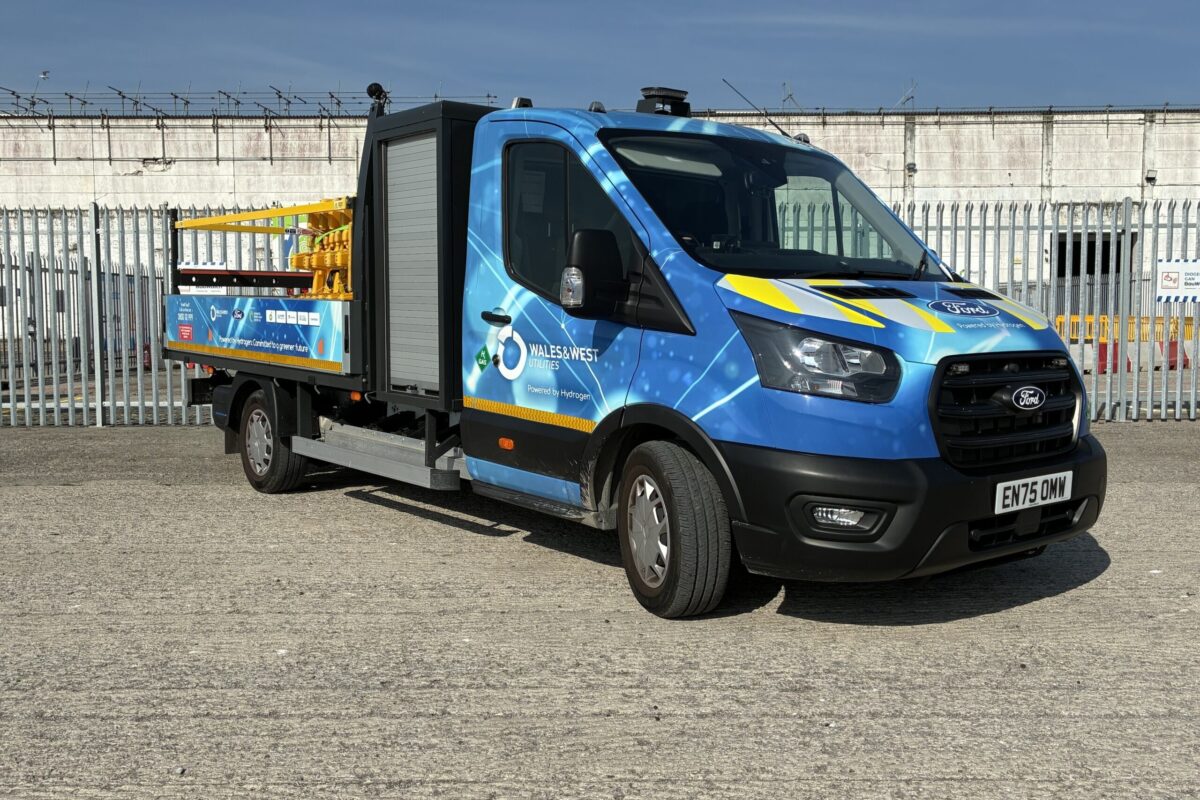
Wales & West Utilities (WWU) has launched a green hydrogen vehicle trial in Swansea in collaboration with Ford, as part of its commitment to explore options to reduce carbon emissions from its operations.
WWU is running the 12-week vehicle trial of a prototype Ford Transit light commercial vehicle.
The project by the gas emergency and pipeline service looks to find solutions for parts of its vehicle fleet where low carbon options are currently limited.
Built with a fuel cell, which runs on hydrogen gas, the vehicle trial is supported by specialists in hydrogen technologies.
The hydrogen is being produced and delivered by Protium Green Solutions, with the vehicle being refuelled at a facility supported by Fuel Cell Systems at the Hyppo Hydrogen Solutions site in Swansea.
During the trial, WWU operational colleagues will use the vehicle on a daily basis, driving around the wider Swansea and West Wales area to understand the benefits to the business of using this green technology.
While electric vehicles (EVs) are an option for part of WWU’s fleet requirements, there are currently challenges with payload, range and towing capacities, as well as recharging, according to WWU.
It added that the UK public charging network is not yet suitable to support WWU’s entire fleet.
Related
Zest rolls out ultra-rapid charging bays at popular fast-food chains
Vertellus launches free EV transition toolkit for fleet operators
EA-RS Group appoints Ogilvie Fleet to support vehicle operations
Zenith provides 10 electric vans for NG Bailey trial
LCV market up 11.4% in October – SMMT
Autumn Budget 2026: No eVED reform despite industry outcry
M25 central to van fleet operations, Geotab finds
In-car technology and driver distraction cause one in three crashes – Allianz
Toyota, Waymo start autonomous vehicle testing in Japan, UK deployment planned

Autumn Budget 2026: Support for drivers to use home energy tariffs on local charging network

Autumn Budget 2026: “Disappointing” for those moving to cleaner mobility – The Electric Car Scheme