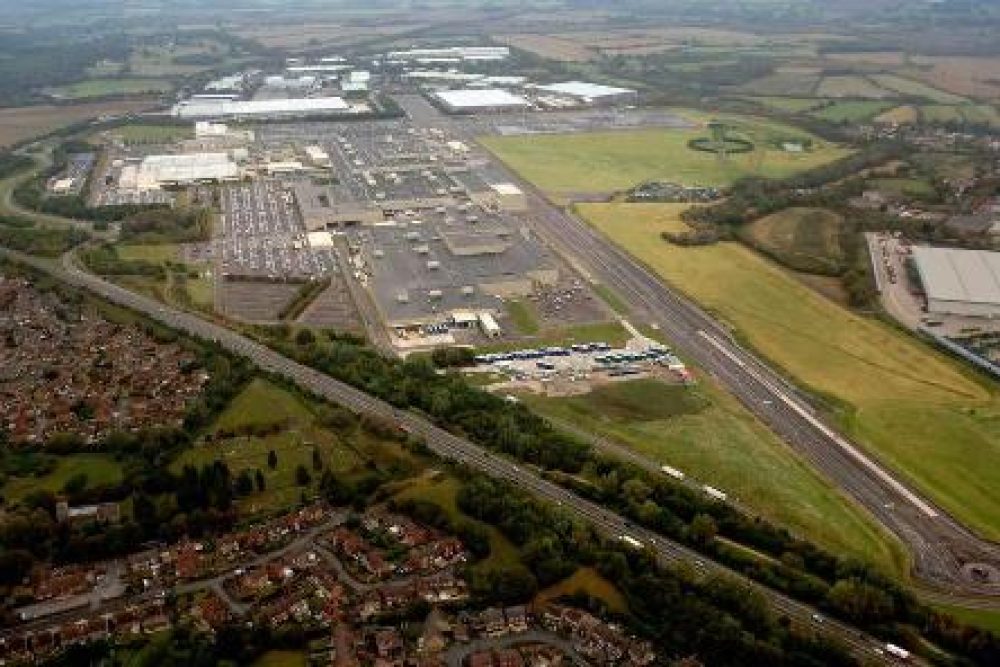
THE question of Honda’s commitment to its manufacturing plant in the UK has come up many times.
I asked during the economic slumps of the 1990s and late 2000s, as well as more recently in terms of Brexit. The answer has always been that the company is in it for the long term – through thick and thin.
Honda has always made the point that it builds plants locally without taking any government incentives.
Something of a shock, then, that it announced the closure of its Swindon plant in 2021 with the loss of 3,500 jobs.
A shock, but no surprise.
It may be convenient for some to jump on the “I told you so Brexit bandwagon”, but this is something of a red herring – the problem is more global.
For instance, over the past 20 or so years, Ford’s decision to halt vehicle production in the UK, GM’s to cease Vauxhall cars assembly at Luton, PSA’s ditching of its plant at Ryton were all based on economic or business conditions.
It is the same for Honda. It’s plant was built as a hedge against tariffs into the EU – actually the recent EU-Japan trade deal has rendered this obsolete so it could be argued as much to blame as Brexit.
Honda said in its statement that it needs to move more quickly to electrification while some ask why this can’t be done in the UK, as a business decision it would clearly be madness to do so.
Why? Because it sold around 136,000 vehicles a year across Europe last year – a tiny number when measured against global sales of 5.2 million. It sold more than 1.4 million cars in both the US and China in 2018.
The Swindon plant has the capacity to build 250,000 vehicles a year but hasn’t done so for a while and one line has been mothballed for some time now.
Looking at the numbers it is sales that have hit Honda hardest which is a shame – the Swindon-built Civic is a really great car and should be selling in much higher volumes in Europe.
What next for Swindon? Who knows, but there could be some hope. Chinese companies, for example, are looking to establish manufacturing in Europe – although the UK’s relationship with the EU may well come into play here – or maybe even as a centre for vehicle battery production.