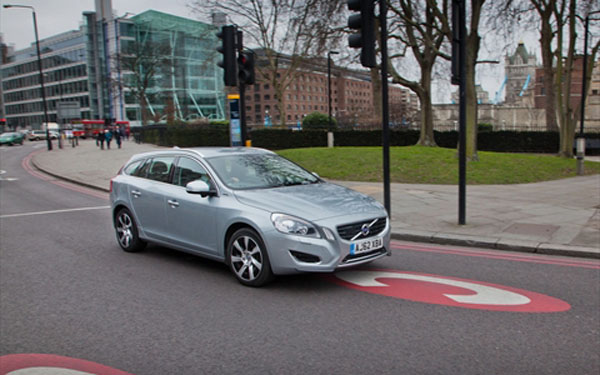
THERE’S never been a better time to think about a hybrid as a way of upping the cost efficiency of your business car.
Hybrids and tax dodging
- Capital allowances changed from April. A car’s emissions now need to be 95g/km CO2 and below to qualify for the 100 percent writedown. Few cars beat that limit, but hybrids generally do.
- The company car tax escalator will really bite over the next few years – many will pay 6% more by 2017, so hybrids’ low emissions look ever better.
- Diesel hybrid drivers don’t pay the 3% diesel surcharge that applies until 2016/2017 tax year.
- Bottom rate of VED.
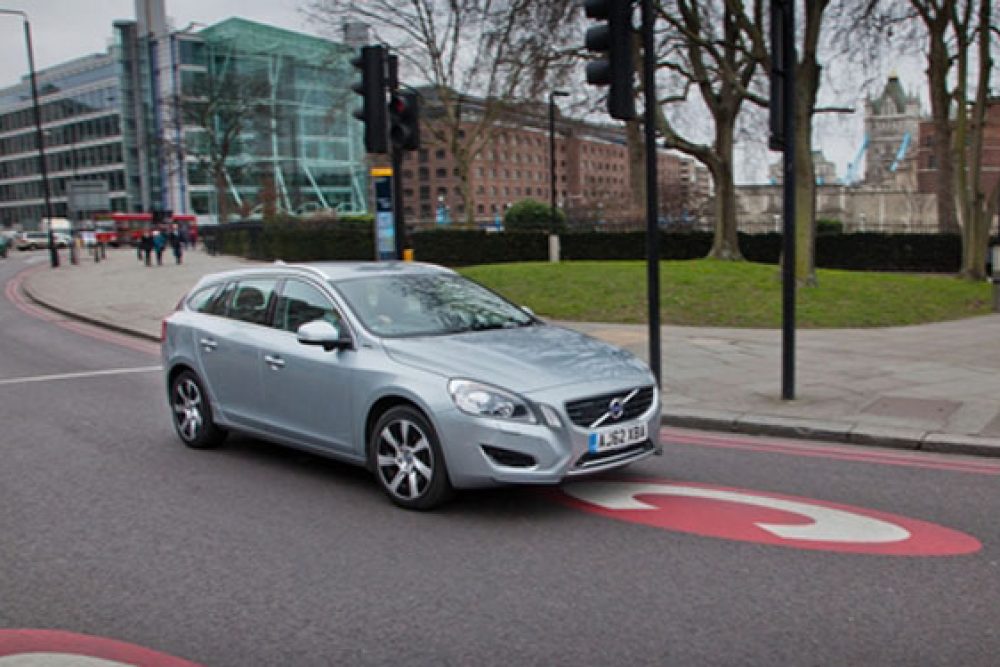
- And from July 1 exemption from the London Congestion Charges only applies to cars with emissions of under 75g/km, Most hybrids do the job.
Tax changes are making the sums look much more attractive, particularly from a benefit in kind company car tax standpoint.
And there’s a new breed of ultra-low emissions cars being driven by hybrids and plug-ins like the Toyota Auris, Mercedes E 300 (our SME Company Car of the Year winner), and Vauxhall’s Ampera (OK, not strictly a hybrid but a range-extender).
All this is bringing hybrids much more into the business car mainstream. That’s good news if you’re interested in economy and tax efficiency.
But manufacturers need to find a better way of expressing hybrids’ fuel consumption – though in their defence they’re only following the rules.
The need for meaningful figures
What business motorists need are figures that allow them to make a judgement of how the car will work in their own real world motoring.
What they get is either a figure based on consumption when the car is running only on its battery power, or the so-called ‘Condition B’ which is what the car does when the battery is exhausted.
Neither shows the average business motorist what they’ll get using the car in the real world. And ironically, neither figure shows the real strengths of a good hybrid.
Here’s a great example. Recently we reviewed the Volvo V60 plug-in diesel hybrid. The world’s first diesel plug-in as it happens.
Read the car review for more, but suffice it to say we were impressed by the car, its supercar-like performance (0-62 is just 5.8 seconds), and its economy.
David Wilkins, our reviewer, coyly described his progress on the test as ‘spirited’, and the car did 45mpg. Given that it would have been running almost entirely on diesel, for a car of this size and performance that’s excellent.
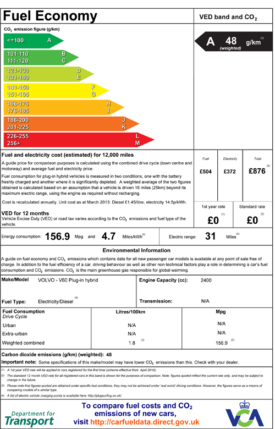
But the ‘official’ figure for the V60 hybrid is 155mpg!
Figures in mpg are meaningless – we don’t buy electricity by the gallon
Why? Because under the official test conditions the Volvo runs on battery power for its official electric range of 32 miles plus 16 miles on diesel.
Not only is the figure in mpg pretty meaningless because we don’t buy electricity by the gallon, but it only tells you what’s going to happen if you stay within a 48 mile range.
Relevant? Absolutely on your morning commute, but not even half the story.

WE ASKED Volvo to comment. Selwyn Cooper, National Corporate Operations Manager at Volvo Car UK said:
“All vehicle manufacturers are legally required to quote the fuel economy figures from official tests to give a consistent set of data that enables consumers to make an informed decision about a car’s efficiency relative to its rivals. With the pure electric, hybrid and power driving modes on the V60 PHEV, the fuel efficiency achieved will depend more than ever on the route, distance and driving style for each journey. Customers who buy a V60 PHEV will also be given a comprehensive vehicle handover to ensure they fully understand how the car works, what the benefits of hybrid technologies are, and what effect the different driving modes have in everyday use.”
On the other hand, our company car tax calculator quotes 57.5mpg for the V60 hybrid running on ‘Condition B’ – that is, with a flat battery.
So how do you know how good it really is, assuming you’re a canny business motorist who’s interested in the Volvo because it suits your mix of commuting, business trips and private use. Well, you don’t, and that’s the issue.
The Eurocrats and the manufacturers need to get together and come up with a credible means of quoting economy figures for hybrids. Here’s what’s needed:
- A cost per mile for when the car is running on battery power only;
- A Condition B figure for when it’s on diesel or petrol only;
- And a real world combined figure that’s a true reflection of the car’s efficiency in real world driving.
And of the three, the last is the most important. Then motorists would have all the tools to get an accurate idea of whether a hybrid is the right business car for them.
For our car review of the Toyota Auris click here. For our car review of the Mercedes E 300 diesel hybrid click here. For more on the Vauxhall Ampera click here.